Climate-adaptive Community Water Management for Food Security: Experiences from the UNDP Community Water Initiative
by Sulan Chen, Katharina Davis
Facing the double menace of climate change threats and water crisis, poor communities are now encountering ever more severe challenges in ensuring agricultural productivity and food security. Hence, communities have to manage these challenges by adopting a comprehensive approach that not only enhances water resource management, but also adapts agricultural activities to climate variability. Implemented by the Global Environment Facility’s Small Grants Programme, the United Nations Development Programme (UNDP) Community Water Initiative (CWI) has adopted a distinctive approach to support demand-driven, innovative, low cost and community-based water resource management for food security.
This paper shows that a grassroots-level programme such as the CWI can be an effective way to address the complex interconnections between water, climate, and agriculture in rural communities. The success stems from the custom-tailored design of local water management solutions, which take into account the specific context in which the community operates and uses water. Four cases of community-based water management for agriculture are presented and analysed for future learning and replication. The first case shows how the Pollattawa village near the Sigirya World Heritage Site in Sri Lanka revitalized an ancient irrigation scheme by combining it with modern technologies. This has enabled the community to replenish the watershed area, develop traditional farming and expand into alternative livelihood activities through the sale of agricultural products. In Mauritania, a community project created safe and sustainable drinking water sources in a pastoral community. A number of mini-dams and rock lines on the gently sloping land were constructed to conserve water and soil and promote the recharging of groundwater. Two wells were rehabilitated and two new wells were constructed, which improved domestic and agricultural water use. Newly built troughs for the animals improved watering for the animals and hygienic conditions within the community.
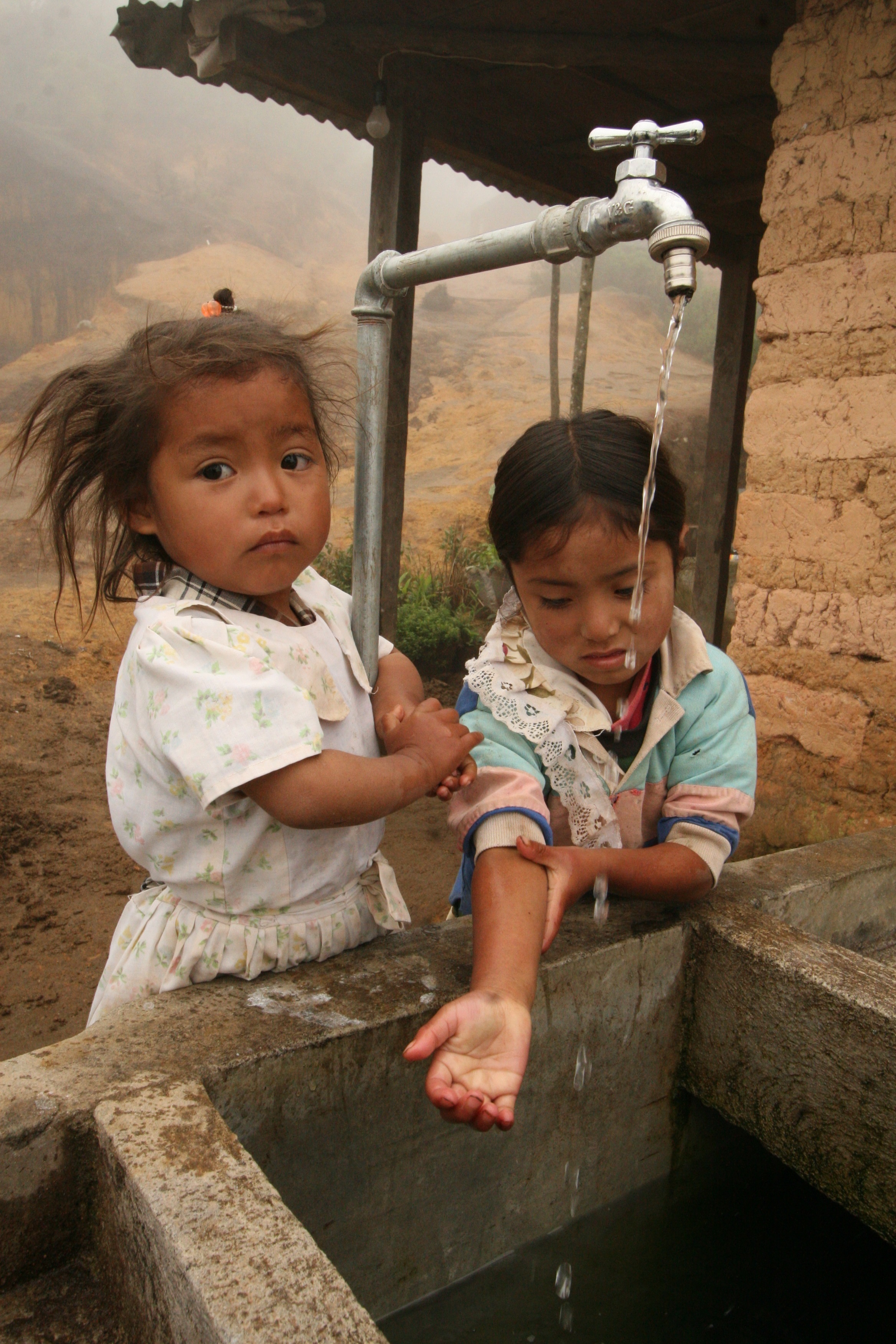
A CWI project in the highlands of Guatemala, implemented a gravity-fed water scheme by tapping four local springs, supplying drinking water to all households in the community. In addition, soil preservation and reforestation activities contributed to the rehabilitation of the local watershed area. Improved availability of water allowed the community to grow enough food to move beyond subsistence and sell the surplus on the local market. And finally, in a small village in south-western Mali, a CWI project supported a community in rehabilitating a dam to overcome devastating water shortages. By expanding the initial small dam and increasing the storage capacity, the community achieved sustainable access to water and expand farming activities into counter-seasonal gardening, which boosted local food security.As these cases have illustrated, experiences from CWI show that a comprehensive, locally adapted approach that integrates water resources management, poverty reduction, climate adaptation and community empowerment provides a good model for food security and sustainable development in poor rural areas.
Read full paper at http://fofj.org/index.php/journal/article/view/99
Uniform Resource Name Code urn:nbn:de:hebis:34-2014062645552
Photo credit:- Sulan Chen, Katharina Davis