Connecting the Water and Carbon Cycles for the Generation of Food Security and Ecosystem Services
by Shivaan Burke and Raul Poncé-Hernandez,
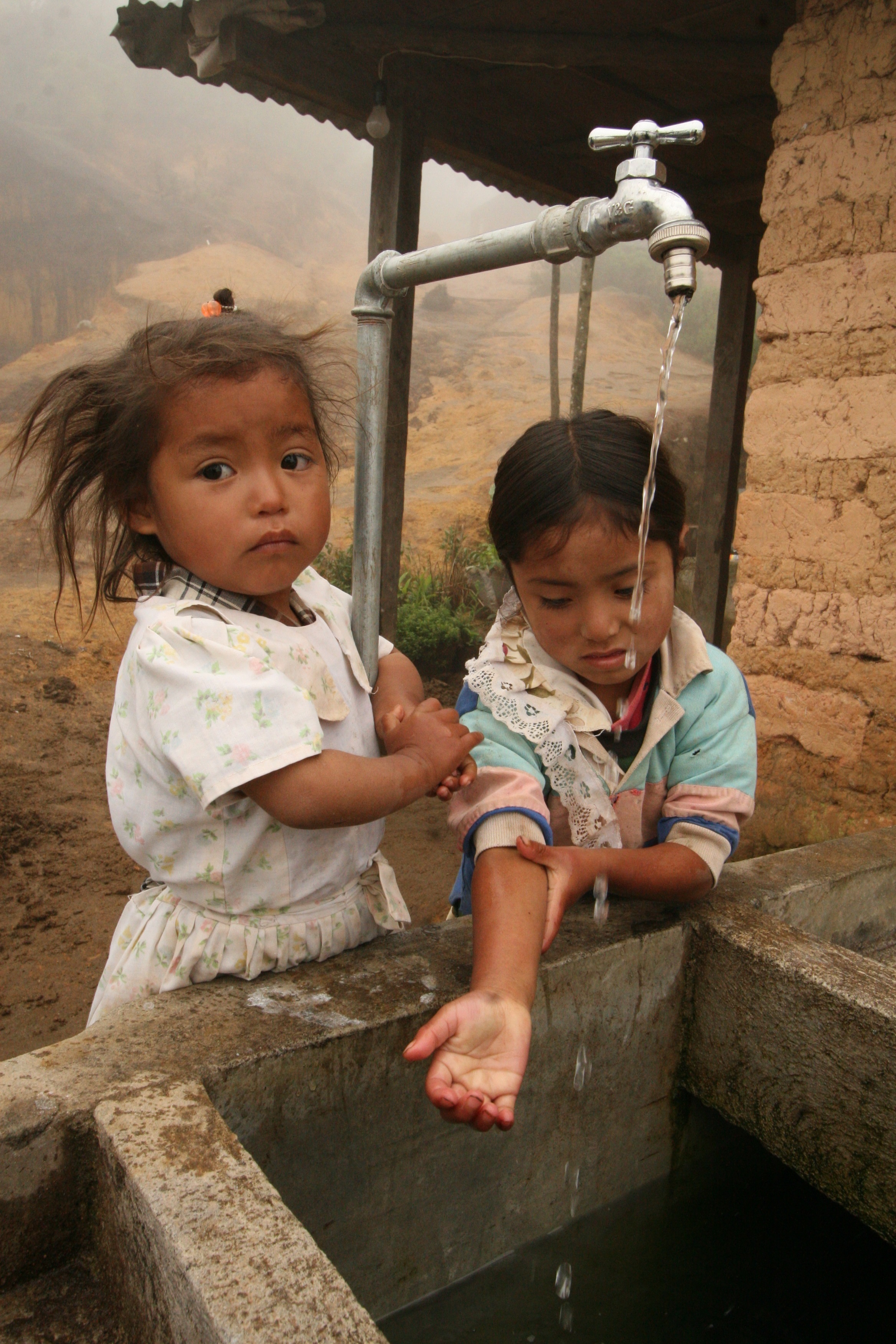
Water scarcity remains one of the primary driving forces behind poverty, especially in the developing world. Largely a problem of distribution exacerbated by the poor’s lack of social power and access to resources, water scarcity contributes to many symptoms of poverty, the most critical of which is food insecurity (Ahmad, 2003). The main cause of water scarcity is the uneven distribution of fresh water resources, compounded by inefficient water use, pollution of threatened water resources and unsustainable waste and resource management.
Poverty is more prevalent in the developing world and, in countries and regions with arid and semi-arid climates, water scarcity acts as the main limiting factor in biomass production, which contributes to lower crop yields and food insecurity. A paradigm for the connection between the water and the carbon cycles is illustrated in this paper through the study of an irrigated, peri-urban agroforestry system at “La Huerta” in Texcoco, Mexico, a semi-arid area in South Central Mexico. The WaNuLCAS model (a model of Water, Nutrient and Light Capture in Agroforestry Systems, Van Noordwijk et al, 2011) is used to simulate the growth of crops and trees in an agroforestry system using the site conditions observed at La Huerta for model parameterization. Interactions taking place within the agroforestry system that are most influential include shading by trees, competition for water and nutrients in topsoil, increased nitrogen availability to crop roots and long term effects on soil organic matter, erosion and soil compaction. Emphasis is placed on below-ground interactions where competition for water and nutrients is based on the effective root length densities of trees and crops and demand by both plant components (Van Noordwijk et al, 2011). In order to simulate waste water irrigation conditions at the agroforestry site reference values for water quality in the nearby Rio Texcoco were used for nutrient input values (Vazquez et al, 2007).
Water from the Rio Texcoco is commonly used for irrigation of adjacent agricultural crops but is not transported to agroforestry systems in the region. The performance of the systems in terms of carbon accrual (g/m2) is compared based on a number of above- and below-ground carbon pools, namely: soil organic matter (SOM), tree biomass, harvested crop biomass, total carbon stocks and the resultant global warming effect of the entire system. Modelling results show a much greater, even erratic variability in biomass accrual under conditions of water scarcity. Under waste water irrigation the production of biomass, SOM and crop yields not only increases, but is also more sustained throughout the simulation period. As the agroforestry system matures these increases, relative to the rain fed scenario, become more significant. By increasing crop yields this type of land-use management improves food security at the household and community level, while offering farmers the opportunity to sell surplus goods at market to supplement household income. While the sale of farm goods is the most common method of farm income generation the production of ecosystem services, namely carbon sequestration, is a tangible way for farmers to diversify their income while improving the production performance of their farm (Wise and Cacho, 2007). The results in this paper show clearly that enhanced food security and increased global warming mitigation can be synergistically achieved by connecting the water cycle to the carbon cycle using waste water irrigated agroforestry systems. While agricultural intensification and mechanisation can achieve increased crop yield in a monocropping system, indigenous agroforestry systems take advantage of the natural and successional variability of an area to generate a sustained and diverse array of products (Alcorn, 1990). In this way, agroforestry as a small-scale farming practice can help to maximize resource use efficiency with respect to scarce natural resources (i.e. water, land, soil nutrients). This paper demonstrates that the water and carbon cycles can be effectively and efficiently connected to advantage, and that such systems can materialize, even under various conditions of water scarcity.
Read full research paper at http://fofj.org/index.php/journal/article/view/87
Uniform Resource Name Code urn:nbn:de:hebis:34-2014062645548
Photo credit :-Sisira Withanachchi