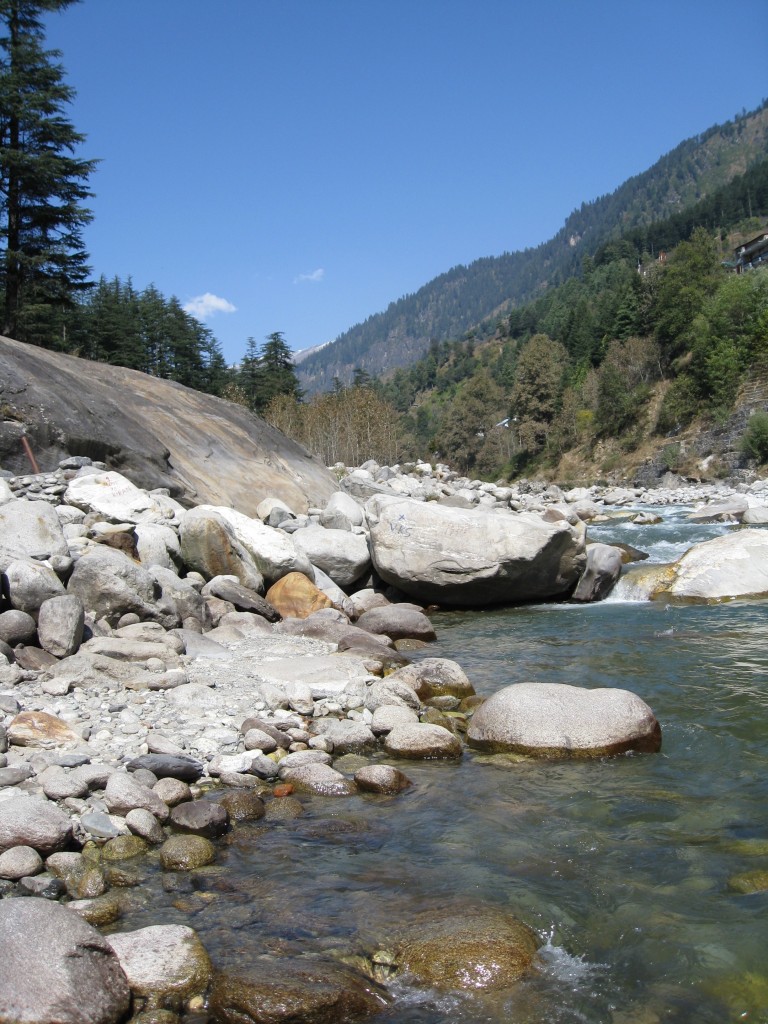
Water Resource Pollution and Impacts on the local livelihood: A case study of Beas River in Kullu District, India
by P. Ranjan Mishra and R.K Nadda
Rivers are considered as the life line of any country since they make water available for our domestic, industrial and recreational functions. The quality of river water signifies the health status and hygienic aspects of a particular region, but the quality of these life lines is continuously deteriorating due to discharge of sewage, garbage and industrial effluents into them. Water demand has increased manifolds due to the increased population, therefore tangible efforts to make water sources free from pollution is catching attention all across the globe. This paper attempts to highlight the trends in water quality change of River Beas, right from Manali to Larji in India. This is an important river in the state of Himachal Pradesh and caters to the need of water for Manali and Kullu townships, besides other surrounding rural areas. The recent trends in increased human activities have impacted the water quality of this important river to a great extent. The level of sediments and pollution is increasing day by day and so the quality of the water is deteriorating. The problem of degradation of Beas River seems to lie on so called ‘tourism and urbanization’ with complete disregard of the environmental, cultural and religious significance of the river. The Manali-Larji Beas river stretch is exposed to the flow of sewage, garbage and muck resulting from various project activities, thereby making it vulnerable to pollution. In addition, the influx of thousands of tourists to these towns also contributes to the pollution load by their recreational and other tourist related activities. Pollution of this river has ultimately affected the livelihood of the local population of this region who are dependent on tourism and fishery business. Hence, water quality monitoring was carried out for the said stretch between January, 2010 and January, 2012 at 15 various locations on a quarterly basis, right from the upstream of Manali town and up to downstream of Larji dam. Temperature, colour, odor, D.O. pH, BOD, TSS, TC and FC has been the parameters that were studied.
The study confirms presence of increased level of Total Coliform and Faecal Coliform during the studied months which is indicative of the fact that the river receives untreated or partially treated sewage. The above statements justify the impression that water of River Beas is not fit for drinking and even for bathing in the study area vis-a’-vis water quality standards set by Central Pollution Control Board. It is feared that if the present trend of pollution continues the livelihood of people depending on tourism may be endangered as the surrounding may lose its recreational importance. However, the State Pollution Control Board has issued orders to some hotels in Kullu-Manali that water and electricity supply will be cut leading to a closure on causing pollution in Beas River. The National Green Tribunal had made it clear that whosoever is found throwing or dumping any such material or effluents directly or indirectly into river Beas or its tributaries or even at its banks, will have to pay a sum of USD 1500 as compensation on the basis of “polluter pays” principle. This seems to be a good sign for the future of Beas River in general and the livelihood of people in particular who depend on the quality of water e.g., fishermen, horticulturists, agriculturists and adventure operators.
Read full research paper at http://fofj.org/index.php/journal/article/view/81
Uniform Resource Name Code urn:nbn:de:hebis:34-2014062645581
Photo credit:- D. J Singh